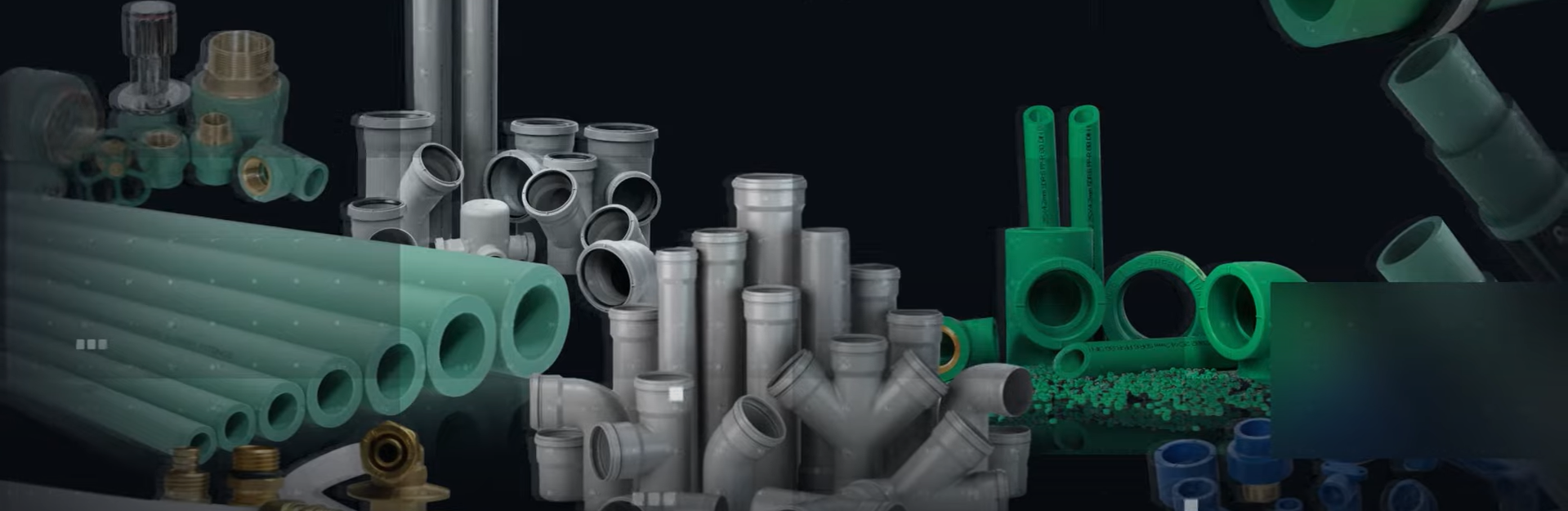


Upgrade your plumbing installations with high-quality PPR pipes designed for residential, commercial, and industrial projects. Our range includes solid PP-R, PPR-CT, and multilayer fiber options to meet diverse water distribution requirements across the UAE.

Engineered with precision and durability, these solid PP-R pipes ensure seamless flow and exceptional performance across a range of applications. Available in sizes ranging from 20mm to 200mm, they offer reliability and longevity for your piping needs.

SOLID PPR-CT pipes represent the pinnacle of plumbing technology, designed to meet the demanding requirements of modern construction projects. Crafted from polypropylene random copolymer with crystalline temperature resistance (PPR-CT), these pipes excel in durability, thermal stability, and corrosion resistance.

Introducing QTherm PP-R Piping System multilayer fiber pipes, setting a new standard in piping excellence. These innovative pipes combine strength, flexibility, and corrosion resistance to deliver unparalleled performance.

Raising the bar in piping solutions, QTherm PP-R Piping System PPR-CT multilayer fiber pipes offer unmatched durability and UV protection. Engineered to withstand harsh environments, these pipes provide superior performance and longevity.

Elevate your piping infrastructure with QTherm PP-R Piping System Multilayer Fiber Pipes featuring UV protection. Crafted to withstand the harshest environments, these pipes offer a unique combination of strength, flexibility, and UV resistance.
Every piping installation has specific requirements for material construction, operating conditions, and routing. The QTherm range brings together multiple PPR pipe options, helping engineers, contractors, and procurement teams identify products suited to their system designs.
Designed for dependable plumbing and water distribution installations, solid PP-R pipes offer a practical solution for projects requiring consistent dimensions and corrosion-resistant piping. Available in sizes from 20mm to 200mm, they accommodate a variety of installation requirements.
Manufactured from polypropylene random copolymer with crystalline temperature resistance (PPR-CT), these pipes are designed for modern plumbing applications requiring suitable thermal and mechanical performance. Selection should follow the applicable product specifications and operating conditions.
Multilayer fiber construction combines PP-R material with a reinforcing fiber layer to support the requirements of specific piping installations. These pipes offer an alternative to conventional solid PP-R construction where the system design calls for multilayer pipe technology.
Combining PPR-CT material with multilayer fiber construction, these pipes provide another option for projects with specific performance and installation requirements. Refer to the relevant product specifications when evaluating suitability for an application.
Application Requirements: Identify whether the pipe will be used in residential plumbing, commercial buildings, or industrial installations, and match the product construction to the intended service.
Pipe Diameter: Choose dimensions according to flow demand, system calculations, and connection requirements. QTherm solid PP-R pipes are available in sizes from 20mm to 200mm.
Operating Temperature and Pressure: Review the pipe's technical ratings at the expected operating conditions to confirm that it meets the project's requirements.
Pipe Construction: Compare solid PP-R, PPR-CT, and multilayer fiber options based on the specified system design and relevant product data.
Installation Environment: Consider routing, exposure conditions, jointing methods, and compatibility with the required fittings before finalising the pipe specification.
Choosing the right pipe material helps support the performance and suitability of a plumbing system. PPR pipes offer useful material and construction characteristics for modern water supply networks across residential, commercial, and industrial buildings.
The smooth bore of PPR pipes helps reduce flow resistance and limits the accumulation of deposits along the inner pipe wall, supporting efficient water distribution when the system is correctly designed.
PPR pipes are relatively lightweight compared with many traditional piping materials, making them easier to transport, position, and handle during installation across different building projects.
Compatible PPR pipes and fittings can be joined using heat fusion, creating an integrated connection when the correct equipment, procedures, and installation practices are followed.
Available in solid PP-R, PPR-CT, and multilayer fiber configurations, PPR pipes offer options for projects with different design priorities and operating requirements. The appropriate type should be selected according to the system specification.
Correct installation plays an important role in maintaining joint integrity and supporting the reliable operation of a PPR piping system. Following the manufacturer's guidelines at each stage helps ensure that pipes and fittings are installed in accordance with the project's technical requirements.
Compatible Fittings: Use fittings designed for the specified pipe system to ensure proper connections and dimensional compatibility.
Heat-Fusion Procedures: Follow the manufacturer's recommended heating times, temperatures and joining procedures for the relevant pipe dimensions.
Pipe Support and Alignment: Provide appropriate supports and maintain alignment according to the installation layout and system requirements.
Pressure Testing: Inspect completed joints and test the system according to applicable project specifications before commissioning.
Installation Guidelines: Follow the manufacturer's technical documentation and applicable plumbing standards throughout installation.
Following these installation practices helps maintain piping system integrity and supports consistent performance under specified operating conditions. Always refer to the manufacturer's technical documentation to ensure the installation meets the project's requirements.
Build your water distribution system around the right pipe specifications. Explore our PPR pipe range and partner with a dependable PPR pipe supplier to source suitable solutions for your project's requirements.
The QTherm collection includes solid PP-R pipes, solid PPR-CT pipes, multilayer fiber pipes, PPR-CT multilayer fiber pipes, and multilayer fiber pipes with UV protection. Each variant has distinct construction characteristics, so selection should be based on the intended application and product specifications.
QTherm solid PP-R pipes are available in sizes ranging from 20mm to 200mm. Size availability for other pipe variants may differ. Refer to the individual product specifications to confirm the required dimensions.
Solid PP-R pipes use a solid PP-R wall construction, while multilayer fiber pipes incorporate a reinforcing fiber layer. Their construction and performance characteristics differ, so the appropriate option depends on the project's design requirements and the manufacturer's technical data.
The choice depends on the system's operating temperature, pressure requirements, design specifications, and the ratings of the individual products. Compare the relevant technical data for each pipe type before making a selection.
Project teams can contact Quantum Industries with their required pipe type, dimensions, quantities, and application details. This information helps the team identify relevant QTherm products and clarify availability and supply requirements.