Sustainability has evolved from a design trend into a critical requirement for modern construction. Across the UAE, developers and consultants are increasingly pursuing certifications such as LEED, Estidama, and BREEAM to demonstrate environmental responsibility and operational efficiency.
While façades, lighting, and HVAC systems often take center stage in sustainability conversations, the building’s internal infrastructure plays an equally decisive role. Among these hidden yet essential systems, piping networks contribute significantly to resource conservation and long-term performance.
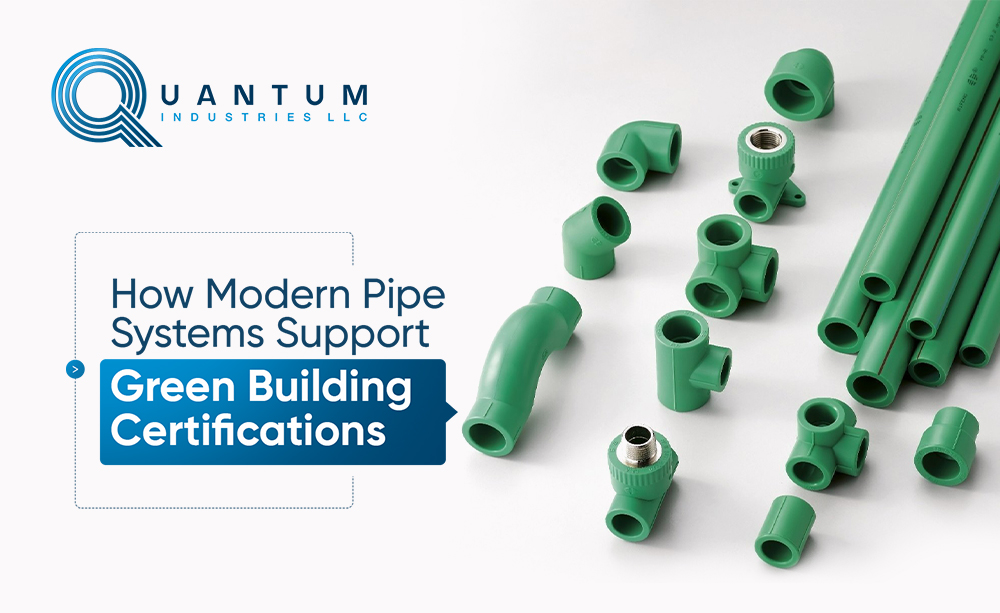
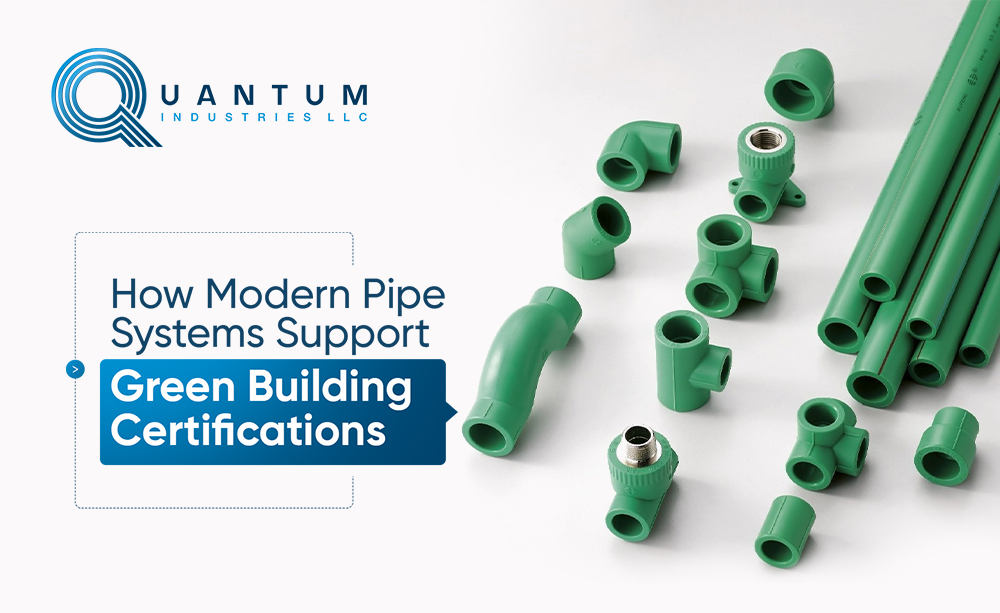
As a trusted pipe supplier in UAE and a leading Pipes and Fittings Manufacturer in UAE, Quantum Industries recognises that advanced pipe systems are not merely functional components. They are strategic investments that influence water savings, energy efficiency, durability, and overall environmental impact throughout a building’s lifecycle.
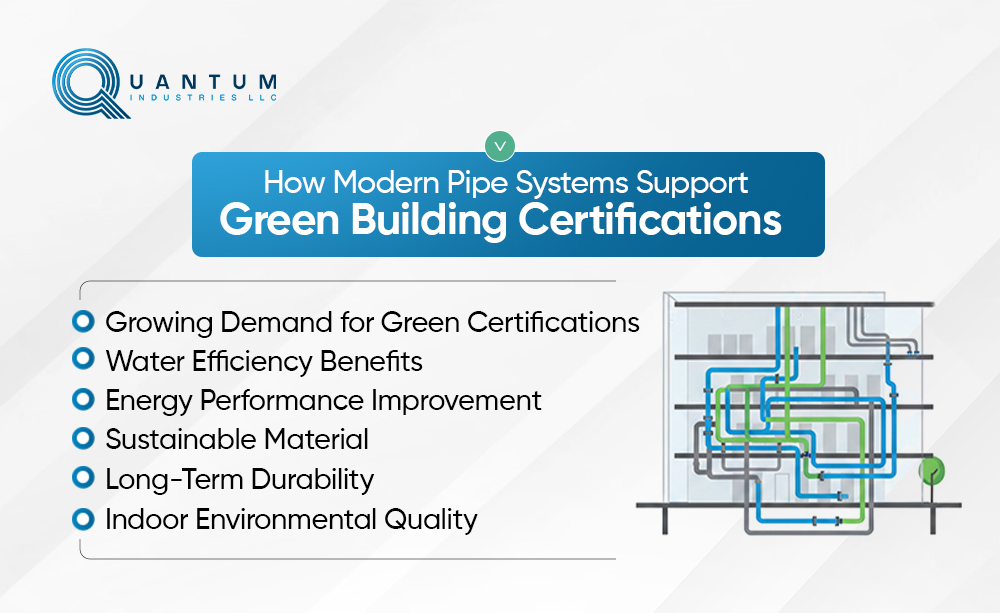
Green building certifications provide measurable standards that guide sustainable construction. These frameworks assess how efficiently a building uses water and energy, how responsibly materials are sourced, and how well indoor spaces support occupant health.
Today’s investors, tenants, and regulators expect buildings to meet these standards. Certification not only strengthens environmental credentials but also enhances asset value, lowers operating costs, and improves brand reputation. To meet these expectations, every component — including the piping infrastructure — must be carefully selected.
Piping systems run through every corner of a building. They manage potable water, drainage, heating, cooling, and even fire protection. Because they operate continuously, their efficiency directly affects daily resource consumption.
Even small inefficiencies, such as heat loss, leaks, or corrosion, can accumulate into substantial energy waste and maintenance expenses over time. Modern engineered pipe systems address these challenges, transforming basic plumbing into high-performance infrastructure that supports sustainability goals.
Water conservation is a key criterion for most green building certifications, particularly in regions like the UAE where water resources are limited. Efficient piping systems minimise losses and ensure reliable distribution across all fixtures.
Advanced thermoplastic pipes are designed to maintain consistent pressure, reduce leakage risks, and withstand scaling or corrosion that can compromise performance. By improving the integrity of the network, buildings reduce wastage and achieve measurable reductions in consumption, directly contributing to certification credits.
Energy savings are closely linked to how effectively water temperatures are maintained during distribution. Traditional materials, especially metals, often allow heat to dissipate quickly, forcing mechanical systems to work harder.
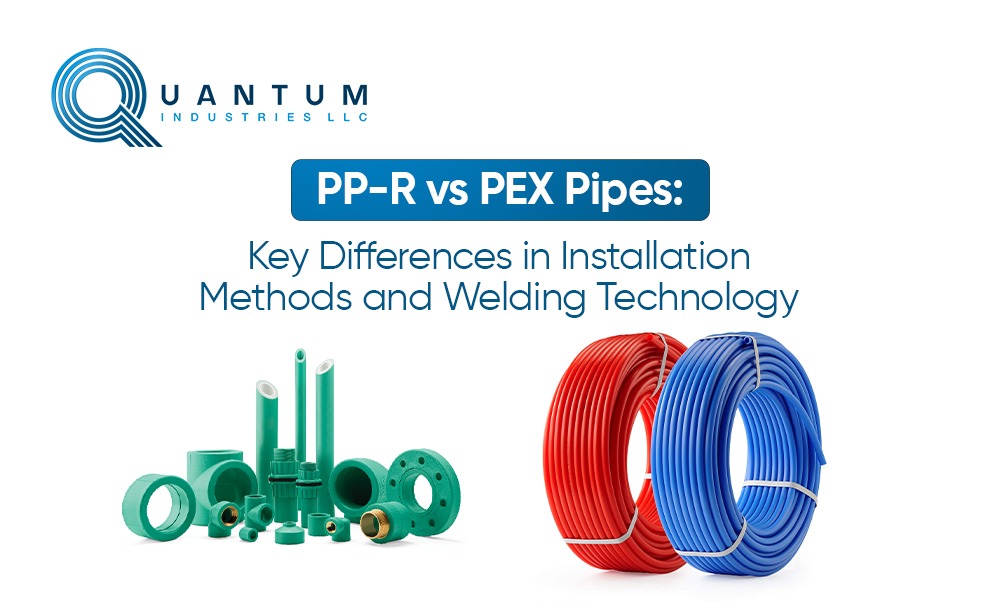
Modern materials such as PP-R and PEX provide superior thermal insulation, reducing heat transfer and maintaining water temperature for longer periods. This reduces the energy required for reheating or cooling, improving the overall efficiency of HVAC and plumbing systems. Over time, these efficiencies translate into lower energy bills and reduced carbon emissions.
Green certifications evaluate not only how systems perform but also how they are manufactured and disposed of. Environmentally responsible materials help projects achieve better lifecycle assessments.
Contemporary piping systems are produced using recyclable, non-toxic materials that generate fewer emissions during production. Their lightweight nature reduces transportation energy, while recyclability ensures that they contribute less waste at the end of their service life. This alignment with circular economy principles strengthens a building’s sustainability profile.
Sustainability is closely connected to longevity. Systems that fail prematurely require replacement, resulting in additional resource consumption and construction waste. Durable pipe systems reduce the need for frequent repairs and replacements.
High-quality modern pipes resist corrosion, chemical reactions, and mechanical stress, ensuring reliable performance for decades. In demanding climates like the UAE, this resilience is especially valuable. Longer service life means fewer disruptions, lower maintenance costs, and a reduced environmental footprint.
Healthy indoor environments are another essential component of green building certifications. Reliable piping systems help maintain clean, safe conditions within a structure.
Leak-free plumbing prevents moisture buildup, mould growth, and water contamination. Proper drainage systems reduce odours and protect air quality. By ensuring safe water delivery and effective wastewater management, modern pipes support occupant comfort and well-being, which are increasingly important factors in certification scoring.
Sustainability begins even before a building is operational. Lightweight, easy-to-install piping systems streamline construction processes and reduce on-site waste. Faster installations require fewer resources, lower transportation emissions, and minimise disruptions.
Prefabricated fittings and precision-engineered components also ensure consistency and reduce the risk of installation errors. These efficiencies contribute indirectly to greener building practices by lowering the overall environmental impact of construction.
Green certification requires clear documentation to prove that materials meet environmental and performance benchmarks. Working with reputable manufacturers ensures access to detailed technical data, safety certifications, and compliance reports.
This transparency simplifies the approval process for consultants and contractors, making it easier to demonstrate that the chosen systems meet sustainability targets. Reliable documentation also reassures stakeholders that the infrastructure will perform as expected over the long term.
Achieving green building goals is not just about choosing the right products; it is about partnering with experienced manufacturers who understand regional requirements and international standards. A knowledgeable supplier provides technical guidance, consistent quality, and solutions tailored to modern construction needs.
With expertise in advanced piping technologies, Quantum Industries supports consultants, contractors, and developers in selecting systems that align with both performance and sustainability objectives. This collaborative approach ensures that every project benefits from durable, efficient, and environmentally responsible infrastructure.
As the construction industry moves steadily toward greener practices, piping systems have become central to achieving measurable sustainability outcomes. From conserving water and reducing energy consumption to enhancing durability and supporting healthy indoor spaces, modern pipe technologies play a decisive role in green building certifications.
By working with an experienced pipe supplier in UAE and a dependable Pipes and Fittings Manufacturer in UAE such as Quantum Industries, project teams can confidently integrate high-performance piping solutions that meet rigorous environmental standards while delivering long-term value. Thoughtful infrastructure choices today lay the foundation for buildings that are efficient, resilient, and sustainable for decades to come.